
Your next market should be your easiest yet: what to reuse and what to rebuild
In this article, brought to you by NuxGame, chief business development officer Bar Konson explains which parts of an igaming business should travel to a new country unchanged, which parts must be built locally, and why the second launch is the one that shows whether a setup was ever designed to expand

2026 has been a generous year for anyone with a growth plan. Alberta opened its regulated market on 13 July, with 22 of the 50 registered operators live on day one. Finland began accepting licence applications on 1 March, ahead of a market that opens on 1 July 2027. In Brazil, more than 80 authorised companies now run over 180 brands. It has also been an expensive year to stand still: UK remote gaming duty rose from 21% to 40% in April.
That is a lot of open doors, and few operators will stop at one. So the real work is carrying as much of each launch as possible into the next.
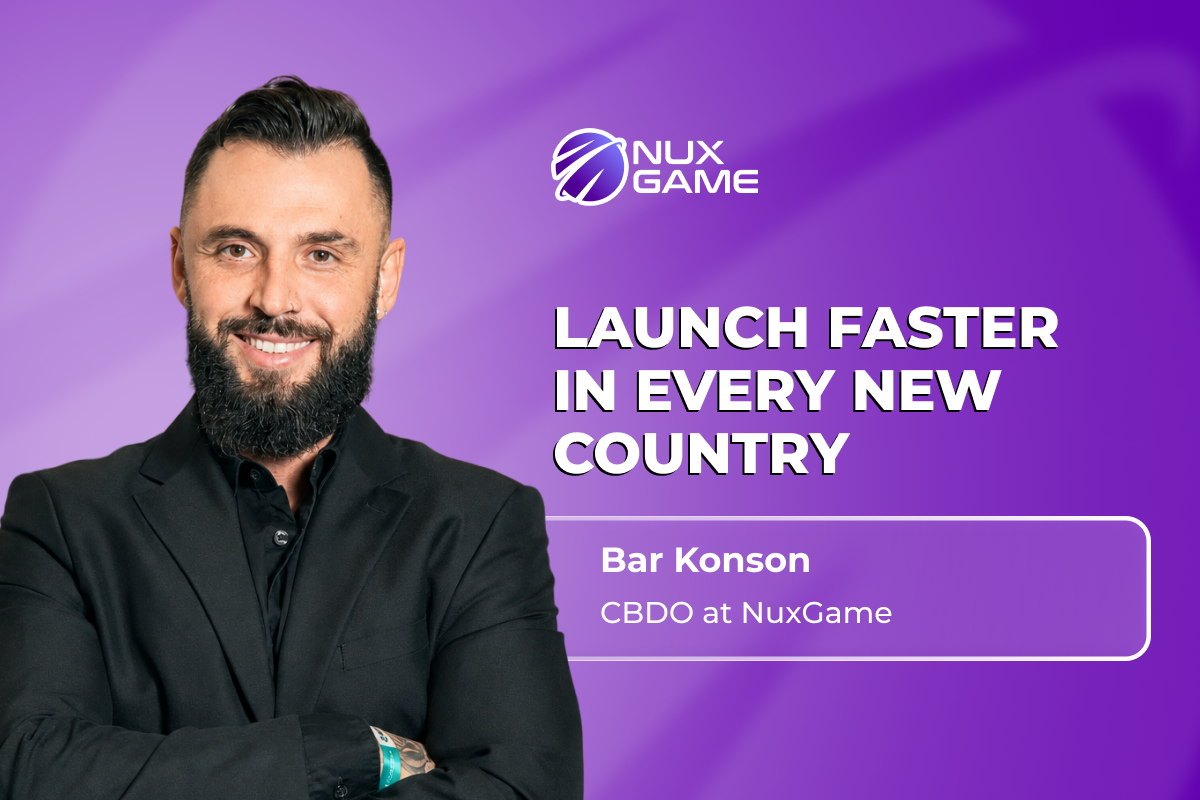
Here, Bar Konson, chief business development officer at NuxGame, explains what should travel unchanged, what has to be rebuilt every time and why the second market is the honest test of a setup.
EGR: With this many markets opening, why do operators still find the next launch just as hard as the last one?
Bar Konson (BK): Because they pack a new suitcase for every trip instead of repacking the one they already own. And I understand why. The first launch is personal. You built it from nothing, so you assume none of it is reusable. Then market two arrives, and the same team rebuilds the same things: accounts, wallets, bonus logic, reports, support workflows, affiliate tracking. None of that is country-specific. It is the same work in a different language.
The simplest test I know is cost. Market three should cost you less than market two, which should cost less than market one. If that number stays flat, the market is not the problem. The setup is. You are paying twice for work you have already done.
EGR: What genuinely has to change in a new country?
BK: Less than most people assume. Really only three things: payments, the player checks the local regulator asks for, and the rules about which content you can offer and how you can advertise it. Everything else should travel. Some markets add technical demands of their own (Brazil wants your systems hosted locally) but those are exceptions to plan around, not the pattern.
Payments are the one to respect. A brand can be fully licensed, beautifully designed and completely live, and still not take deposits well. In Brazil, Pix carries the overwhelming majority of deposits, and credit cards are not permitted for betting at all. In Mexico, players reach for OXXO and SPEI. In Kenya, it is M-Pesa. Paysafe research across 13 markets found 44% of bettors have abandoned a bet because their preferred payment method was not available. You pay to bring players in, then lose them at the cashier. That is the most expensive place to lose anyone.
This is where a wider partner ecosystem makes the difference. When your igaming platform already comes with payment, CRM and compliance partners who are working in the market you are entering, you are choosing between options that already run rather than starting a search from nothing. At NuxGame, we spent years building that ecosystem, and I like to say we took the wrong turns first so our clients do not have to.
EGR: So payments, player checks and content rules change. What should stay the same everywhere?
BK: The back office. One place to see every market.
If a new country means a new admin panel, a new report format and a team learning both, you are starting again with a bigger logo rather than expanding. No pilot would want the buttons in a different place on every flight, but that is how many operators run their own business.
When you can see every player in one place, you can run all your markets as one business instead of separate companies that happen to share a name. It also shows you what stays hidden otherwise: which market keeps its players longest, which promotions work in more than one country, and which market is really paying for the rest.
EGR: You know what to reuse and what to build locally. What decides when you can actually go live?
BK: Your slowest approval, and it is almost never the front end or the game lobby. A road trip moves at the pace of the slowest car, and licensing and payments are always at the back. In several markets your payment provider has to be licensed before you can take a single deposit, and that timeline belongs to them, not you.
So make licensing and payments the first calls, not the last. Finland is the clearest case: the application window opened 16 months before the market does, and processing alone runs to around six. In Alberta, the brands taking bets at midnight were the ones who filed months earlier. Nobody wins that race in the final week.
EGR: Do regulators make any of this easier?
BK: More than people expect. Alberta based its rules on Ontario’s on purpose, so operators already licensed in Ontario could open there without starting from nothing. Brazil does something similar: one licence covers up to three brands, and a fourth brand means a second licence and a second fee. Plan the brands early and you pay once. Regulators are writing their rules so work can be used again. Operators should build the same way.
EGR: What should an operator check before opening market number two?
BK: Four questions, and you can answer them all this afternoon.
- How much of what you built for the first market are you actually reusing? Count it honestly – it is usually less than it feels.
- Does each new market cost you less than the last one?
- Can one team run both markets from one screen?
- Which approval will take longest, and have you started it yet?
If you like the answers, you are expanding. If you don’t, you are repeating yourself in a new currency.
EGR: A final word for operators planning their next launch?
BK: This is a good year to be ambitious. Alberta is open, Finland is coming, Brazil has found its footing, and more markets are moving behind them. Finding somewhere to go was never the hard part.
The first market teaches you the business. The second one tells you whether you built it to travel. Get that right, and every market after it arrives faster and smoother – which is exactly what expansion is supposed to feel like.

Bar Konson is the chief business development officer (CBDO) at NuxGame. He leads the company’s growth strategy, driving partnerships, market expansion and commercial development. Konson works closely with igaming operators worldwide to strengthen business positioning and support scalable, high-performing platforms.