
UIGEA at 20: how a cataclysmic piece of legislation upended and reshaped the industry
In the first instalment of a two-part series, EGR speaks to execs who were left reeling back in 2006 by the “horrible surprise” of politicians making it illegal to accept payments for online gambling in the US

It’s a Sunday afternoon in 2006 and Rob Gallo is relaxing with his wife in Half Moon Bay, the crescent-shaped beach which hugs the turquoise waters lapping at the Caribbean island of Antigua. Like most Sundays, they are playing dominoes within arm’s reach of a hard-shell cool box containing a pack of beers. Their two children, aged 14 and 11, are skimboarding and playing with friends in the surf.
Suddenly, Gallo’s Nokia cell phone disturbs the peace. Arching his hand into a makeshift canopy to shield the monochrome display from the bright sunshine, he sees the caller is a representative of Cryptologic, the tech supplier to Gallo’s online gaming sites, Sun Poker and Omni Casino. It wasn’t good news, Gallo recalls to EGR. “The woman from Cryptologic says, ‘As of noon Tuesday, we no longer take US bets, casino or poker’. It was like, holy shit! You got to be kidding? Literally 85% of our business just disappeared overnight. It sucked.”
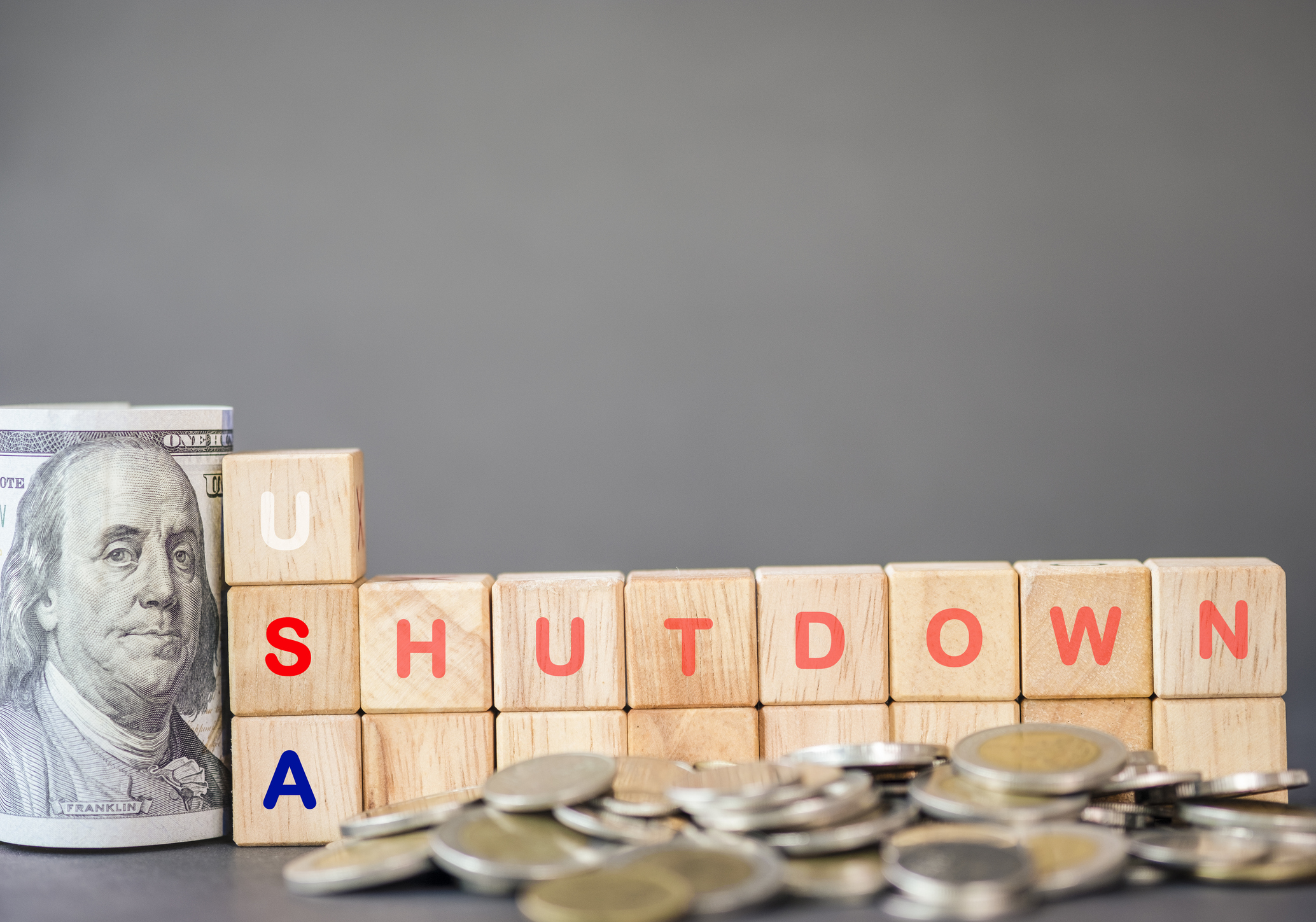
The reason for Cryptologic’s expeditious retreat from the US was that earlier that weekend, in the small hours of Saturday, 30 September, Senate Majority Leader Bill Frist rammed legislation through Congress to pull the rug from beneath the industry. Hastily tacked onto the SAFE Port Act – a federal law designed to beef up maritime and cargo security to protect against terrorist threats – was the Unlawful Internet Gaming Enforcement Act (UIGEA). While this mouthful of a law didn’t explicitly ban online gambling, it made intentionally processing payments for the purposes of online gambling a criminal offence.
Choke the means of funnelling money to and from an online sportsbook, casino or poker room via banks and credit cards and you effectively suffocate the industry. Remember, this was two years before the pseudonymous Satoshi Nakamoto published the whitepaper on bitcoin. Shoehorning an unrelated gaming law deep inside a must-pass piece of port security legislation on the last day of the Congressional session before November’s midterm elections, certainly caught the industry off guard. “Who’s going to vote against port security in a post-9/11 world?” Gallo ripostes. “They just stuck it in as an amendment to a bill that everyone is going to sign anyway.”
In fact, many members of Congress didn’t even realise UIGEA had been added to the SAFE Port Act. “It was great political manoeuvring – completely outfoxed us,” concedes Mark Blandford, founder of Sportingbet, an Alderney-licensed online bookmaker that had acquired Paradise Poker in 2004. Gigi Levy, who arrived as COO at casino and poker operator 888 in June 2006, says: “I think there was a lot of disbelief for many people. There was also a little bit of anger because it felt like this was glued onto something completely irrelevant.” On 13 October, around two weeks after the SAFE Port Act received bipartisan support and passed by an overwhelming majority, President George W Bush signed it into law.
Opposition forces
Efforts to shut down online gambling in the US had been going on since the 1990s. One of the industry’s fiercest critics, Senator Jon Kyl, came close to achieving that aim with the Internet Gambling Prohibition Act of 1997. This bill would have clarified the Wire Act of 1961 – a federal law that prevents wire communications to transmit bets across state lines – also applied to internet gambling. This draft legislation passed in the Senate but died in the House.
Two years later, the Internet Gambling Prohibition Act of 1999 suffered the same fate. It wasn’t until 2005 that Representative James Leach introduced what would become UIGEA, with the purpose to “prevent the use of certain payment instruments, credit cards and fund transfers for unlawful internet gambling”.
By 2005, around two-thirds of American adults had access to the internet and, so, online gambling was surging. Deutsche Bank estimated that in 2005, US citizens logged on to bet more than $4bn on sports, casino and poker. A survey by the American Gaming Association in 2006 found just 19% of American internet bettors thought or knew the activity was illegal.

“It was a business model that actually made cash rather than consumed cash, like the first wave of internet-enabled business models,” says Simon French, a leisure analyst at Numis Securities between 2005 and 2008. “They were operating at 60% or more EBITDA margins because there was no gaming tax to pay and no regulation. If you could find regulation, it was on a supply basis rather than a point of consumption.”
It’s also hard to overstate how big online poker was back in the mid-2000s. The peer-to-peer card game seemed to be everywhere, especially on TV. Yet arguably, the catalyst for the poker boom was accountant Chris Moneymaker winning the Main Event at the World Series of Poker after having qualified for the $10,000 buy-in tournament via an $86 satellite on PokerStars. When this amateur with an almost improbable surname scooped the $2.5m first prize, he’d outlasted a field of 839 players at Binion’s Horseshoe in downtown Las Vegas.
Three years later, at the cavernous Rio Hotel & Casino just off the Las Vegas Strip, a total of 8,773 entries competed for a top prize of $12m. Much of this growth was fuelled by netizens signing up in their droves to poker sites to try to emulate the David versus Goliath story achieved by Moneymaker. “We had millions of people playing online,” says Michael Bolcerek, president of the Poker Players Alliance from 2005 to 2007. “You could play anywhere in the US. Poker relies on a network effect, and this was in full effect – you could always find a game.”
To say those companies serving the US were happy with the lack of a regulatory framework in the US wouldn’t be accurate, though. The listed companies wanted lawmakers to federally legalise online gambling and make it all above board. They were actively lobbying in the US, too. Sportingbet even took out adverts in newspapers like the Wall Street Journal and New York Post featuring the silhouette of a stereotypical British businessman – including a bowler hat and briefcase – with the message: “Please sir, can I pay tax?” Blandford says: “Our angle in lobbying was the big benefit to the US in terms of tax revenue.”
Nevertheless, Sportingbet and a bunch of other US-facing firms felt they had some protection thanks to the General Agreement on Trade in Services (GATS), which came into force in 1995 and included the cross-border supply of gambling and betting services. “The transaction was being offered from and accepted in Antigua, which was covered by that trade agreement,” Blandford explains. In 2003, the twin island nation of Antigua and Barbuda lodged a formal complaint, arguing US federal laws criminalising online and cross-border gambling violated free trade agreements. The World Trade Organization (WTO) ruled against the US, yet the US essentially ignored the decision.
Blandford adds: “Antigua went all the way to the top of the WTO, which the US dragged out over many years, but they won. So, I still say what we were doing was legal where we were doing it.” Plus, those who eschewed sports betting and restricted their offering to gaming felt they weren’t flouting existing laws anyway, as Gallo says: “We had the legal standing that we were not covered by the Wire Act […] they couldn’t contemplate [in 1961] someone playing poker or blackjack over a phone line, so we felt we were pretty solid, on the grounds that we weren’t doing sports betting.”
While there was still some nervousness in the mid-2000s over a potential online gambling clampdown, it didn’t stop capital from continuing to pour into the sector as investors looked to scale existing businesses, fund startups – and ride this digital gold rush. French says: “A lot of this capital was coming from hedge funds […] most just saw huge growth and incredible cash generation.” A few, though, adopted a contrarian position, as French recollects: “Some took the opposite view that this can’t carry on unchecked and unfettered.”
Handcuffs and leg irons
A few months prior to UIGEA becoming law, in July 2006, BETonSPORTS CEO David Carruthers had been transferring planes at Dallas Fort Worth International Airport on his way to Costa Rica. With no direct flights between London and the US-facing online and telephone bookmaker’s operations hub in the country’s capital, San José, this was an inconvenient but unavoidable layover for the 48-year-old Scot. In fact, Carruthers had travelled back and forth via the US hundreds of times in the preceding six years since BETonSPORTS founder Gary Kaplan hired him from Ladbrokes to become CEO in 2000.
Only 16 July was different. Having touched down on a British Airways flight in Dallas with his wife following his attendance at the London-listed company’s annual general meeting, the couple made their way to the gate to catch the connecting flight. Two official-looking individuals approached, just metres from the entrance to the passenger jet bridge. “They were very polite and said, ‘We are from the FBI. Please come with us Mr Carruthers’,” he tells EGR on a video call from his home in the Philippines.
After spending the night in a holding cell at the airport, Carruthers was handcuffed and transferred to a Texan prison in an orange jumpsuit and leg irons. From there, he ended up in St Louis, Missouri, where he discovered he was facing federal charges under the Racketeer Influenced and Corrupt Organizations (RICO) Act – a federal law passed in 1970 to tackle organised crime, namely the Mafia – for taking bets from American citizens over the phone and internet.
Carruthers explains: “The prosecution against me was not for betting without a permit, which is what my UK criminal record states. They charged me with RICO conspiracy, which comes with a sentence of 20 years.” BETonSPORTS shares slumped 20% after the CEO was detained. Eight days later, on 24 July, Carruthers was fired. A month after being picked up in Dallas, he pleaded not guilty and was released on a $1m bail bond, though he remained under house arrest – first in a St Louis hotel and then an apartment – for the next 42 months.

Prior to Carruthers’ arrest, Blandford of Sportingbet says he had been “spending quite a bit of time in the US lobbying”, yet he could sense the “temperature was rising a bit” and so ceased all travel to the US. However, chair Peter Dicks flew from London to New York in early September on business unrelated to Sportingbet – namely a board meeting of a Nasdaq-listed company – and found himself under arrest at JFK Airport. The next morning, cops handcuffed Dicks to a murder suspect and transported him to Rikers Island, New York’s largest prison.
It transpired Louisiana, a state where “gambling by computer” was specifically unlawful, wanted to extradite the silver-haired businessman from the Empire State. If convicted, the penalty was five years behind bars and a fine of up to $20,000. The problem for the authorities in Louisiana – but good news for Dicks – was New York had no such law. “They couldn’t extradite him for something that wasn’t specifically illegal in New York,” Blandford says. Therefore, a New York judge refused to sign the extradition order and Dicks, who by this point had resigned as chair of Sportingbet, was set free on 29 September, the same day UIGEA was pushed through Congress.
The party’s over
For publicly traded companies, the ramifications of what UIGEA meant for the industry began to sink in over the weekend of 29 September. Leadership teams and boards cancelled plans and sought legal advice on whether they should pull the plug on the US. Whatever the decision, gambling stocks were bound to crater once the markets opened on the Monday morning as investors ran for cover. “There wasn’t a playbook you took out of the safe Monday morning if they shut the US down,” French remarks.
The most significant casualty of a selloff was likely to be PartyGaming. Founded in 1997 by American Ruth Parasol from the proceeds of her online porn and sex phone line business, the group comprised a network of gaming sites and which, from 2001, grew into the world’s largest poker site: partypoker. By 2005, ahead of PartyGaming’s IPO, this gaming juggernaut was raking in roughly £500 per minute. PartyGaming listed on the London Stock Exchange in June 2005 at 116p, giving the business a valuation of £4.6bn.
Approximately 200 institutions bought stock at the float price, while advisers Dresdner Kleinwort Wasserstein revealed it could have placed the shares three times over. Already worth more than the likes of British Airways and Rolls-Royce, PartyGaming entered the FTSE 100 in the autumn of 2005. The majority of the company’s workforce handled software development and customer support from Hyderabad, southern India, while the head office was in Gibraltar.
Nigel Birrell arrived in the British Overseas Territory in December 2005. Appointed PartyGaming’s group director of mergers and acquisitions, he remembers it being “party time” (no pun intended) with generous salaries and share options which vested every year in a company that was snowballing in size. “In 2007, we would have done a billion dollars EBITDA [if it hadn’t been for UIGEA]. That would have been all cash profit – the company was flying […] it was way bigger than British Airways and other companies at the time, but also way bigger than other gaming companies.”
Despite the lingering legal uncertainty about operating in the US – a market which accounted for well over three-quarters of PartyGaming’s revenue in 2005 – Birrell recalls an upbeat mood among gaming execs in Gibraltar that there wouldn’t be some sort of clampdown across the pond. They’d tried before with numerous bills and nothing passed, right? Levy remembers a similar feeling at 888: “Up till that Friday evening, literally everybody was sure there was no chance anything was going to pass.”
An early wake-up call
This growing quiet optimism, together with the release of Dicks on 29 September, prompted Birrell to suggest to a former boss at a black-tie charity event at London’s National History Museum that same night he buy gaming shares. That bullishness evaporated when Birrell was woken by a phone call at 6am the following morning and given the bad news about what had happened in Congress.
“I got involved a bit from a distance over the weekend, but it was then all hands on deck in terms of deciding whether we should pull out of the US. It was 48 hours of conversations with US lawyers.” Birrell recollects there were “some factions within PartyGaming who didn’t want to come out”, yet the majority felt there was no real option but to withdraw. “On Monday [2 October] we announced we would pull out of the US market when the bill was signed.”
Listed on London’s Alternative Investment Market (AIM), an exchange for smaller, high-growth companies, Sportingbet’s bosses also concluded they needed to beat a hasty retreat. Blandford recalls: “We had to come up with back-of-a-cigarette-packet numbers that would tell the market the likely impact of our complete withdrawal from the US. It was far and away our largest market. Quite frankly, we were overweight to the US.” To put a number on it, he says, America was responsible for 60% to 70% of Sportingbet’s business. Henceforth, Sportingbet would focus on Europe and Australia, while Paradise Poker would plough on sans US players.
888, which floated in London 12 months prior and had recorded an 88% year-on-year surge in pre-tax profit for H1 2006, also quickly announced its exit. In what turned out to be a prudent play, the operator behind brands including Casino On Net and Pacific Poker had been reducing its reliance on the US (52% of revenue at the end of June 2006), with CEO John Anderson reassuring shareholders in the H1 results presentation that 888 was “a viable business even in an Armageddon scenario”.
Despite this, Levy remembers UIGEA came as “horrible surprise” for the operator and its staff, resulting in a flurry of calls among the board and major shareholders over the weekend of 29 September. He says there were also back and forth calls between the major public firms to gauge opinions. “We were all kind of clueless and trying to understand each other’s perspective – rather than getting another legal opinion”, Levy says.
“Nobody [at 888] was ready for it. This was a company that never fired people – it was the best company in the world because it was always growing.” Levy, who would be promoted from COO to CEO as of 1 January 2007, adds: “You’re suddenly not profitable, you got shareholders who were used to getting dividends all day long, and a company that went public on a story that’s now gone.
“This turned from the best job ever to literally the hardest.” He interrupts himself. “Maybe ‘hardest’ is the wrong word. My father keeps telling me hard is when you carry bags of cement in the sun all day long, but it was still one of the most challenging and straining jobs I’ve ever had.”
Click here to read part two